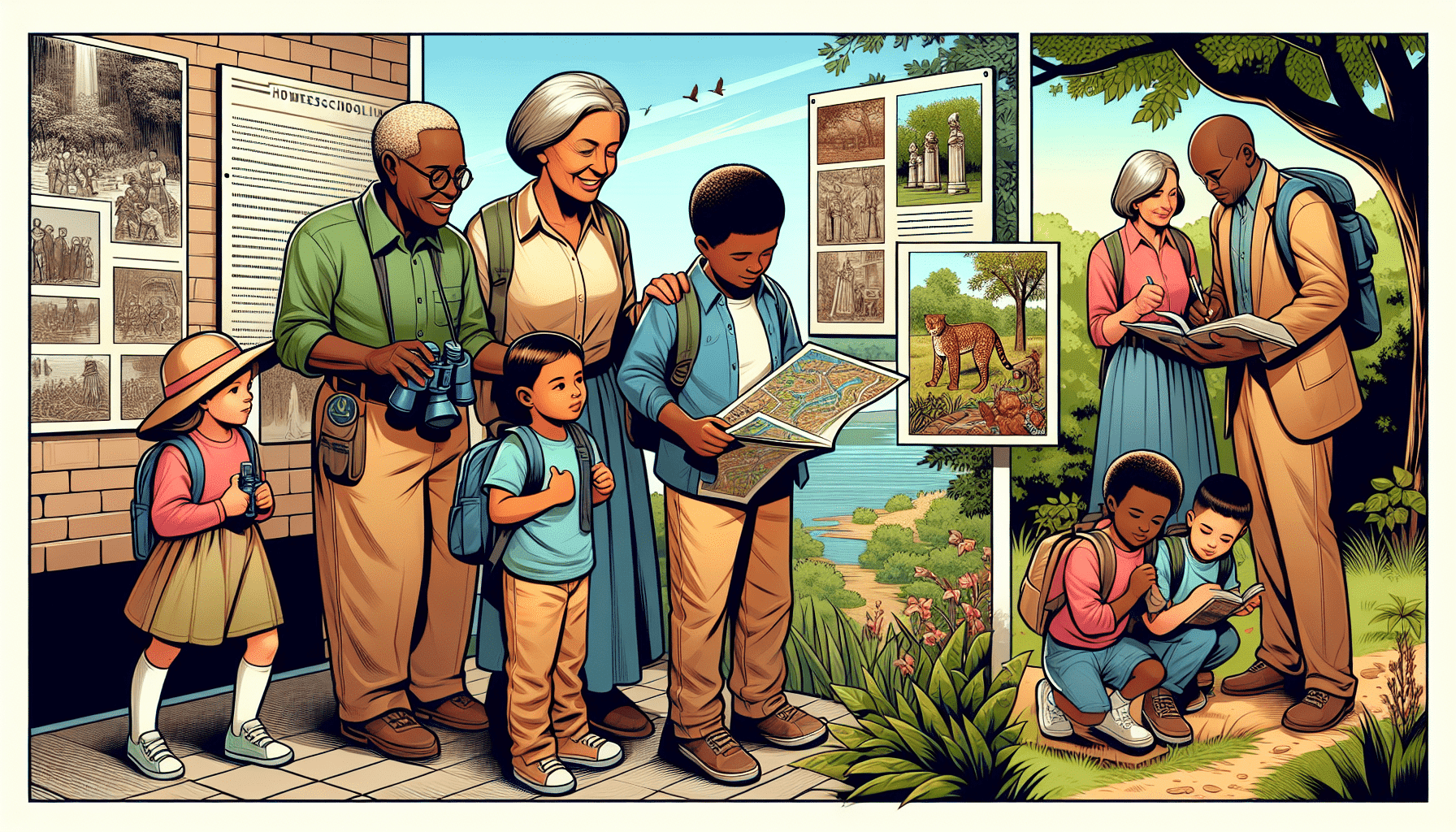
If you’re a parent looking to enrich your child’s homeschooling experience, incorporating field trips and real-world experiences into their curriculum might be just the thing you need. By taking learning beyond the boundaries of textbooks and classrooms, you can provide your child with valuable hands-on experiences that will deepen their understanding and make learning more engaging. In this article, we will explore various ways in which you can seamlessly integrate field trips and real-world experiences into your child’s homeschooling journey, making it a truly enriching adventure.

Benefits of Incorporating Field Trips and Real-world Experiences
Enhanced learning opportunities
Incorporating field trips and real-world experiences into your child’s homeschooling curriculum can greatly enhance their learning opportunities. Traditional classroom settings may limit the scope of education to textbooks and lectures, but by venturing outside the home, children can engage with the world in a tangible and experiential manner. Field trips provide a more dynamic learning environment, enabling children to actively participate and deepen their understanding of various subjects.
Hands-on experiences
One of the most valuable benefits of field trips and real-world experiences is the opportunity for hands-on learning. Children can touch, explore, and interact with their surroundings, which sparks their curiosity and promotes active engagement. Whether it’s conducting science experiments, visiting historical sites, or observing nature in a park, hands-on experiences allow children to gain a deeper understanding of concepts and foster a love for learning.
Real-world application
Field trips and real-world experiences provide a valuable bridge between theoretical knowledge and real-life application. By immersing themselves in practical situations, children can see how the concepts they learn in books are applied in everyday life. This real-world application not only enhances their understanding but also helps them develop critical thinking, problem-solving, and decision-making skills. They can witness firsthand the relevance and importance of what they are learning, making the educational experience more meaningful and memorable.
Social and emotional development
Field trips also offer great opportunities for social and emotional development. By interacting with peers and professionals in different settings, children can develop and refine their social skills, such as communication, teamwork, and conflict resolution. Field trips provide a chance for children to step outside their comfort zones, engage with diverse individuals, and build relationships. Moreover, these experiences can also foster emotional growth, as children learn to adapt to new situations, manage their emotions, and develop resilience.
Identifying Relevant Field Trip Destinations
Local museums and art galleries
Local museums and art galleries are excellent destinations for field trips, providing children with the chance to immerse themselves in history, culture, and art. They can explore fascinating exhibits, learn about different artistic styles, and witness the work of renowned artists. Museums often offer guided tours or educational programs tailored to specific age groups, allowing children to engage with the subject matter in an interactive and informative manner.
Historical sites and landmarks
Visiting historical sites and landmarks allows children to witness the tangible remnants of the past, bringing history to life. Whether it’s touring ancient ruins, visiting historical homes, or exploring battlefields, these field trip destinations provide a unique opportunity for children to learn about the events, people, and cultures that shaped the world. By stepping into the shoes of those who came before them, children can gain a deeper appreciation for history and its significance in shaping our present.
Nature reserves and parks
Nature reserves and parks are fantastic field trip destinations for exploring and learning about the natural world. Children can observe wildlife, study ecosystems, and engage in outdoor activities like hiking and bird-watching. These trips offer a chance to develop an understanding of environmental conservation, emphasizing the importance of protecting our natural resources. Beyond the educational benefits, spending time outdoors in nature also promotes physical activity, relaxation, and overall well-being.
Farms and agricultural centers
Field trips to farms and agricultural centers provide valuable insights into the world of farming, food production, and sustainability. Children can learn about different farming practices, animal husbandry, and the journey of food from farm to table. They may participate in activities such as harvesting crops, milking cows, or feeding animals, allowing for a hands-on agricultural experience. These trips foster an appreciation for the hard work and knowledge required to produce the food we consume, and they also promote a connection to the land and nature.
Preparation for Field Trips
Research and planning
Before embarking on a field trip, research and planning are crucial to ensure a successful and smooth experience. Start by identifying the objectives and learning goals for the trip. Determine how it aligns with the curriculum and what specific topics or concepts will be covered. Research relevant information about the destination, including any educational programs or exhibits available. Take note of the location, operating hours, admission fees, and any special considerations. This preparation will help you create a well-organized and purposeful field trip experience.
Creating a budget
Field trips can involve expenses such as transportation, admission fees, and possibly meals or accommodations. Creating a budget will help you manage costs and ensure you stay within your means. Consider all the necessary expenses, including any additional materials or resources required for the trip. Look for funding opportunities or seek support from local homeschooling communities or organizations that may have resources specifically designated for educational experiences.
Contacting destinations
Once you have identified the field trip destinations, it’s important to contact them in advance. Reach out to the museums, historical sites, nature reserves, or farms to inquire about any educational programs they offer or any guidelines for visiting. Some places may have specific booking requirements, while others may have restrictions or limitations due to the number of visitors allowed. By contacting the destinations, you can gather all the necessary information and make the appropriate arrangements.
Obtaining necessary permissions
Ensure that you have obtained all the necessary permissions for the field trip. If you are homeschooling independently, this might involve contacting local authorities, such as the parks department or museums, to inform them about your visit. If you are part of a homeschooling group or organization, they may already have established procedures in place for field trips. It’s essential to comply with any rules or regulations and obtain the required permissions to ensure a safe and legal experience for everyone involved.
Utilizing Virtual Field Trips
Exploring online resources
Virtual field trips offer an excellent alternative for exploring destinations that may be inaccessible in person. There are numerous online resources available, such as virtual tours, 360-degree videos, and educational websites, that allow children to explore museums, historical sites, and nature reserves from the comfort of their own homes. These virtual experiences provide a similar level of immersion, with the added benefit of being able to interact with multimedia elements and access additional information and resources.
Connecting with professionals
Virtual field trips also offer the opportunity to connect with professionals in various fields. Through video conferences or online platforms, children can interact with experts, scientists, artists, or historians, gaining valuable insights and asking questions. These interactions can be highly engaging and inspiring for children, as they get a firsthand look at the work done by professionals in different industries. Establishing connections with experts can broaden their perspective, encourage their interests, and even open doors for potential future collaborations or mentorships.
Virtual reality experiences
Virtual reality (VR) experiences take virtual field trips to the next level by providing an immersive and interactive environment. Through VR headsets or other VR devices, children can explore destinations as if they were physically present. They can walk through historical sites, examine artifacts up close, or dive deep into the ocean to explore marine life. VR experiences add a sense of presence and realism that enhances the educational value and makes the learning experience even more memorable.
Interactive simulations
Interactive simulations provide another avenue for incorporating real-world experiences into the curriculum. These simulations allow children to experiment, practice skills, and apply knowledge in a safe and controlled virtual environment. Whether it’s simulating a science experiment, conducting a virtual archaeological dig, or managing a virtual business, interactive simulations promote critical thinking, problem-solving, and decision-making skills. They offer a dynamic and engaging way for children to learn and explore different fields of interest.

Incorporating Real-world Experiences at Home
Cooking and nutrition
Cooking and nutrition provide an excellent opportunity to incorporate real-world experiences at home. Involve your child in meal planning, grocery shopping, and cooking activities. Teach them about different food groups, nutrition, and the importance of a balanced diet. Through hands-on cooking experiences, children not only learn practical skills but also develop an understanding of healthy eating habits and food sustainability. These experiences can ignite a passion for gastronomy, promote creativity in the kitchen, and foster an appreciation for diverse cuisines.
Gardening and agriculture
Gardening and agriculture activities allow children to connect with nature, learn about plant life cycles, and develop gardening skills. Whether you have a backyard garden or simply a few indoor plants, involve your child in planting, watering, and caring for the plants. Teach them about soil composition, fertilizers, and the benefits of sustainable gardening practices. Gardening provides a sense of responsibility as children witness the growth and development of plants, fostering an understanding of the environment and the importance of sustainability.
DIY projects and crafts
Engaging in do-it-yourself (DIY) projects and crafts at home encourages creativity, problem-solving, and resourcefulness. Set aside time for art projects, woodworking, or building activities that allow your child to explore their interests and develop manual dexterity. These projects can range from creating artwork using different mediums to building models or constructing simple machines. DIY projects promote critical thinking, innovation, and the ability to see a project through from start to finish.
Entrepreneurship
Encouraging entrepreneurial activities at home provides practical experiences and an understanding of business concepts. Support your child in brainstorming business ideas, creating products or services, and developing marketing strategies. Whether it’s setting up a lemonade stand, starting an online store, or offering services to neighbors, entrepreneurship provides valuable lessons in financial literacy, communication skills, and problem-solving. These experiences cultivate an entrepreneurial mindset and empower children to take initiative, think creatively, and develop a sense of responsibility.
Seamlessly Integrating Field Trips and Experiences into the Curriculum
Relating to academic subjects
Field trips and real-world experiences can be seamlessly integrated into various academic subjects. For example, a visit to a historical site can complement a history lesson, while a trip to a science museum aligns with a science curriculum. Look for opportunities to connect the field trip experiences with the subjects you are currently studying. This integration helps reinforce and expand upon the concepts learned in the classroom, making them more relevant and memorable for your child.
Developing interdisciplinary connections
Field trips and real-world experiences offer a chance to connect different academic subjects, creating interdisciplinary learning opportunities. For instance, visiting a farm can incorporate lessons on biology, environmental science, and agriculture. Encourage your child to make connections between multiple subjects during the field trip, allowing them to see the interconnectedness of knowledge and develop a holistic understanding of the world. Interdisciplinary learning fosters critical thinking, creativity, and a well-rounded education.
Addressing specific learning goals
When planning field trips and real-world experiences, it’s important to identify specific learning goals you want to achieve. These goals can be aligned with your child’s curriculum or personal development objectives. For example, if your child is studying astronomy, a field trip to a planetarium can focus on learning about celestial bodies and space exploration. By setting clear learning goals, you can design field trips that are purposeful, focused, and tailored to your child’s educational needs.
Evaluating learning outcomes
After each field trip or real-world experience, take the time to evaluate the learning outcomes. Reflect on whether the goals were met, what your child learned, and how they have benefited from the experience. This evaluation can be done through discussions, written reflections, or project-based assessments. By evaluating the learning outcomes, you can gauge the effectiveness of the field trips and make any necessary adjustments for future experiences.

Documenting and Reflecting on Field Trips and Experiences
Keeping a journal
Encourage your child to keep a journal to document their field trips and real-world experiences. In this journal, they can write about their observations, reflections, and any insights gained during the trip. Encourage them to include sketches, photographs, or other visual representations that capture the essence of the experience. Journaling allows children to process their thoughts, develop writing skills, and create a personal record of their educational journey.
Creating multimedia presentations
Another way to document and reflect on field trips and experiences is by creating multimedia presentations. With the advancement of technology, children can use various multimedia tools to compile photos, videos, or audio recordings from their trips. They can narrate their experiences, explain what they learned, and showcase any projects or artifacts they created as part of the experience. Creating multimedia presentations allows children to develop communication skills, digital literacy, and a sense of pride in their accomplishments.
Engaging in group discussions
Group discussions provide an opportunity for children to share their experiences, reflect on what they’ve learned, and engage in meaningful conversations with their peers or family members. Sit down together and encourage each person to share their highlights, challenges, and takeaways from the field trip. These discussions can deepen the learning experience, foster collaboration and empathy, and provide different perspectives and insights on the same experience.
Revisiting experiences through reflection
Encourage your child to revisit their field trips and experiences through reflection. This can be done by looking through their journal entries, going through their multimedia presentations, or simply discussing their memories. Revisiting experiences allows children to reflect on how they have grown, what they have learned, and how the experience has shaped their perspective. It reinforces the value of experiential learning and provides a sense of closure and appreciation for the journey.
Engaging with the Community
Volunteering and community service
Engaging in volunteering and community service activities fosters a sense of civic responsibility and empathy in children. Look for opportunities to volunteer together as a family or within homeschooling groups. Whether it’s serving meals at a local shelter, participating in environmental clean-up events, or organizing donation drives, volunteering provides children with practical experiences to address social issues and make a positive impact in their community.
Attending local events and workshops
Attending local events and workshops broadens children’s exposure to different cultural, artistic, and educational experiences. Explore community calendars, libraries, and local organizations to identify events that align with your child’s interests or curriculum. Attend art exhibitions, science fairs, or storytelling sessions to expose your child to diverse experiences and perspectives. These events provide an opportunity for children to engage with their community, explore new interests, and learn from experts in various fields.
Joining homeschooling groups and co-ops
Joining homeschooling groups and co-ops allows your child to engage with a community of like-minded individuals and create meaningful connections. These groups often organize field trips, workshops, and social activities, providing opportunities for your child to interact with peers and learn from other homeschooling families. By joining these groups, your child can benefit from shared resources, diverse perspectives, and the social support network these communities provide.
Forming partnerships with local businesses
Consider forming partnerships with local businesses to enhance your child’s homeschooling experience. Connect with mentors or professionals in fields that align with your child’s interests, such as science, arts, or entrepreneurship. These partnerships can provide opportunities for job shadowing, internships, or even collaborative projects. By forming connections with local businesses, you can bring real-world experiences and expertise directly into your child’s education, giving them a first-hand understanding of different industries and potential career paths.

Overcoming Challenges and Concerns
Addressing safety considerations
When planning field trips and real-world experiences, safety should be a primary concern. Assess the potential risks and take precautions accordingly. Research the safety measures in place at each destination and ensure they align with your standards. Prepare emergency contact information, first aid kits, and any necessary medications. Communicate safety rules and expectations to your child to ensure their well-being during the trip. By addressing safety considerations, you can provide a secure and worry-free learning experience for your child.
Managing logistics and transportation
Logistics and transportation can be a logistical challenge when organizing field trips. Plan the logistics in advance, including transportation arrangements and any necessary reservations. Ensure you have considered the timing, duration, and distances involved to optimize the experience. If transportation is a concern, explore options like carpooling, public transportation, or hiring a private bus service. By managing logistics and transportation effectively, you can ensure a smooth and efficient field trip experience.
Adapting to diverse learning styles
Incorporating field trips and real-world experiences into your homeschooling curriculum requires adapting to diverse learning styles. Understand your child’s learning preferences and consider how to cater to their individual needs during the trip. Some children may prefer hands-on activities, while others may learn best through observation or discussion. By incorporating different learning modalities and offering flexibility, you can create a rich and inclusive learning experience for all children involved.
Handling financial constraints
Financial constraints can sometimes limit the scope of field trips and real-world experiences. However, with careful planning and resourcefulness, there are ways to overcome these challenges. Look for funding opportunities specifically designated for educational experiences, such as grants or scholarships. Seek support from homeschooling communities, where members can share expenses, resources, or specialized knowledge. Explore low-cost or free options for field trip destinations, such as public parks, community centers, or local cultural events. By seeking creative solutions, you can provide enriching experiences for your child without stretching your budget.
The Role of Parent as Facilitator
Encouraging curiosity and exploration
As a parent facilitating field trips and real-world experiences, one of your crucial roles is to encourage curiosity and exploration in your child. Nurture their natural inclination to ask questions, investigate the world around them, and pursue their interests. Create an environment that supports and fosters curiosity, providing resources, materials, and opportunities for discovery. By cultivating a sense of wonder and encouraging exploration, you can instill a lifelong love for learning in your child.
Providing guidance and support
Your role as a facilitator is to provide guidance and support during field trips and real-world experiences. Be actively involved during the planning and preparation stages, ensuring that the trips align with educational goals. Act as a resource person, answering questions, addressing concerns, and guiding your child’s learning process. During the field trip, serve as a supportive presence, offering assistance when needed, and engaging in meaningful conversations. By providing guidance and support, you create a safe and nurturing environment for your child’s educational journey.
Tailoring experiences to child’s interests
Recognize and tailor the field trip experiences to your child’s interests. Capitalize on their passions, hobbies, or subjects they are particularly curious about. Incorporate destinations or activities that align with their interests, allowing them to explore their passions more deeply. By tailoring experiences to your child’s interests, you cultivate their intrinsic motivation, engagement, and enthusiasm for learning.
Fostering a love of lifelong learning
Above all, your role as a facilitator is to foster a love of lifelong learning in your child. Through field trips and real-world experiences, you provide opportunities for them to engage with the world, form meaningful connections, and develop a thirst for knowledge. Instill a growth mindset, emphasizing the value of continuous learning, adaptability, and resilience. Be a role model for lifelong learning by demonstrating curiosity, embracing challenges, and pursuing your own educational endeavors. By fostering a love of lifelong learning, you empower your child with the tools and mindset necessary to thrive in an ever-changing world.
In conclusion, incorporating field trips and real-world experiences into your child’s homeschooling curriculum offers numerous benefits. These experiences enhance learning opportunities, provide hands-on experiences, facilitate real-world application, and support social and emotional development. By identifying relevant field trip destinations, preparing for the trips, utilizing virtual alternatives, and incorporating real-world experiences at home, you can create a comprehensive and well-rounded educational journey for your child. Seamlessly integrating field trips and experiences into the curriculum, documenting and reflecting on the experiences, engaging with the community, and overcoming challenges will further enrich your child’s learning experience. Finally, as a parent facilitator, your role is crucial in encouraging curiosity, providing guidance, tailoring experiences to your child’s interests, and fostering a love of lifelong learning. By embracing field trips and real-world experiences, you unlock tremendous educational potential and shape your child’s path to success.